Such venerable historical sword remains a remarkable work of art, but consider if you want to communicate your individual character? Refining your armament is a fulfilling journey, allowing you to create a truly uncommon piece. From the grip wrapping and binding to the guard design and tempering curve, each aspect offers a chance for tailored look. This study delves into the territory of katana modifications, providing guidance for both learners and seasoned enthusiasts pursuing to inscribe their mark on the time-honored art of the samurai.
Primary Authentic Workmanship
For starters eager to embark on the fulfilling journey of historical swordplay, 1060 steel katanas provide an superior entry point. This selected grade of fundamental steel hits a optimal point between economical cost and proficiency. While never as hard as upper-echelon steels, 1060 facilitates a fair level of whetting, making it suitable for novices to master the essentials of cutting tool servicing and understand the attractiveness of expertly made Japanese weaponry. It’s a fantastic choice for developing experience without the budgetary burden of more specialized steels.
T-10 Steel Blades : Achieving Capability and Economy
Supporting aficionados seeking an authentic blade experience without busting the wallet , T10 metal katanas represent a attractive option. These tools offer a noticeable improvement in durability compared to lower-grade alternatives, exhibiting reasonable edge retention and fair flexibility for initial hacking techniques. While not rivaling the excellent characteristics of elite steels like T100 or folded metal , T10 provides a impressive blend of functionality and profitability, making them a appreciated choice for rookies and those on a fixed financial .
Past the Metal: Adjusting Your Armament's Adornments and Tsuka
As the buffed steel is undeniably the focal point of a katana, truly heightening its appeal lies in the thoughtful customization of its features and haft . This art allows individuals to exhibit their distinct style . Review the wide possibilities: menuki - decorative appliqués that offer visual focus; the hamon casings – often carefully engraved ; the tsuka center itself, wrapped in traditional ito cord ; and the fusa pommel , which can be fabricated from various substances like treasures or antler .
- Prefer concepts that echo with you.
- Explore with different ingredients .
- Prioritize superiority for a lasting influence .
The Fascination of the Katana: Origins, Mastery, and Material
Every nihonto features a unique allure, steeped in generations of Far Eastern history and custom . More than merely a device of hostilities , it's a representation of the knight ethos – a fusion of competence and self-control . Its advancement spanned plentiful generations, with early blades evolving into the refined curvature and sharp edge we understand today. The artistry involved is truly exceptional , requiring spans of preparation to perfect . The process involves a involved folding of smelted iron , creating layers that fortify the blade's flexibility and slicing ability. Multiple schools of crafting appeared , each with their special secrets and formulas for achieving the ultimate poise and edge - a truly grueling pursuit.
- First Katana classes
- The importance of the traditional blade in samurai culture
- Ancient forging techniques
Picking the Appropriate Steel for Your Cutting Tool Project: 1060 vs. T10
Opting for the ideal steel is vitally important for any armament project, and the option between 1060 and T10 can be difficult. 1060 is a favored American material, offering a acceptable balance of toughness and hardiness, providing it quite easy to temper. However, T10, a originating from Japan steel, typically boasts enhanced wear longevity and can possibly achieve a higher final hardness, although it can be relatively laborious to control and requires meticulous heat conditioning. Consider your expertise and intended goals: for a learner, 1060 may be a more straightforward launchpad, while the proficient smith t10 steel katana might favor the additional details of T10.
- Manageability of Managing
- Surface
- Final Stiffness
Unlocking the Potential: Advanced Katana Customization Techniques
Mastering the art of katana alteration extends far beyond basic finishing. Serious smiths are now analyzing advanced techniques to truly activate a blade's hidden potential. This includes intricate work with the heat signature, utilizing specialized ingredients for differential tempering and carefully opting for the form of the tsuba to optimize balance and quality. Beyond purely functional alterations, artisans are increasingly focused on generating unparalleled aesthetic charm, through complex embossing and layered textures that truly transform a katana into a masterpiece.
Transforming Basic Steel into Art: Building a 1060 Sword
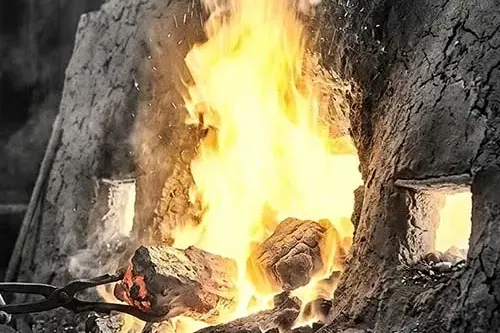
The journey initiates with common 1060 fabrication , a durable material far absent the beautiful katana it will mature into . Master bladesmiths carry out a intricate process of stacking and forging the rough steel, repeatedly glowing it and striking it to separate impurities and produce a balanced grain structure. This tedious process, often continuing for spans , builds the vital sturdiness and ductility characteristic of a authentic Japanese cutlery . Further heat procedures , including deliberate hardening and tempering , are imperative to achieve the targeted equipoise of sharpness, longevity and charm .- Overlaying: Reduces impurities and forms grain structure.
- Hammering: Creates the steel into the initial blade form.
- Tempering: Decides the final hardness and flexibility.
The Lasting Drawing of the Katana: An In-Depth Look at Metal and Personalization
This venerable katana lasts a compelling symbol of Japanese heritage , its fascination far outshining mere artillery . Forged from select steel and usually featuring intricate trims, the process of creation itself is a revered art. Beyond the basic craftsmanship, the ability to modify a katana - from the temper curve to the grip wrapping and clasp - opens for a sincerely individual communication for both supporters and followers alike. This amalgamation of tradition-rooted steelwork and boundless personalization brings the katana's continued presence across the realm .